TCJA provides new rules for taxpayers’ home mortgage interest deduction
The newly enacted Tax Cuts and Jobs Act of 2017 (TCJA) both simplified and complicated many of the tax rules beginning with the 2018 tax filing season. One of these changes, new rules with regard to taxpayers’ mortgage interest deduction, on the surface seems simple but in reality is quite the opposite.
The new rule with regard to home residence mortgages allows a deduction for interest on a taxpayer’s mortgage and equity debt, where the combined debt is capped at $750,000 ($375,000 if married filing separate status). This cap is for residences purchased after December 15, 2017. However, for taxpayers that have an existing mortgage on their residence obtained prior to December 16, 2017, the debt limit remains $1,000,000 ($500,000 if MFS). This “older” mortgage debt is considered “Grandfathered Debt” and is not impacted by the new $750,000 cap. Additionally, just to confuse taxpayers a bit more, the TCJA made an exception to the new rule where a taxpayer who enters into a written binding contract before December 15, 2017, to close on the purchase of a principal residence before January 1, 2018, and who purchases such residence before April 1, 2018, will be considered to have incurred the home acquisition debt prior to December 16, 2017; thus, making the cap on this debt $1,000,000.
Prior to 2018, interest on up to $100,000 of home equity debt was allowed as a tax deduction and taxpayers were not restricted in their use of the home equity loan. Personal use of home equity debt was allowed to qualify for a mortgage interest deduction. The TCJA only allows a deduction for home equity interest if the proceeds of a home equity loan are used for renovating or improving the home. If the proceeds of the debt are used for personal items, the interest paid on the debt will no longer be deductible. For mortgages taken out after 2017, the combined total of mortgage debt plus additional home equity debt (used to improve or renovate a house) is capped at the new $750,000 threshold.
Are you thinking of purchasing a second home? Assuming your total debt combined on both homes will be under the new $750,000 cap, be sure the new mortgage will be secured by the new home. If you take out an equity loan on your primary residence which is then used to purchase the second home, the interest on the home equity loan will not qualify to be deductible mortgage interest – even if the combined loans on the primary residence are less than $750,000. Only interest on mortgage and home equity debt used to purchase, improve, renovate or construct the home being mortgaged will qualify for the mortgage deduction. Taking a loan out that is collateralized by one home in order to purchase a second home will not qualify as deductible mortgage debt.
Refinancing also poses numerous complexities depending on the amount of debt to be refinanced and when the original loan was taken out. Refinancing a mortgage is considered acquisition debt to the extent that the new debt does not exceed the outstanding principal on the old debt immediately before refinancing. Taxpayers that refinance grandfathered debt, are allowed to deduct mortgage interest on the new debt in full, up to the amount of grandfathered debt outstanding just prior to the refinance. For example, if your current mortgage outstanding is $950,000 and this mortgage was in place prior to December 16, 2017, after refinancing you can deduct mortgage interest on the refinanced debt of $950,000. Your refinanced debt will not be capped to the new $750,000 threshold, even if the refinance occurs in 2018.
If a taxpayer does a “cash out” refinance (even if the cash out is solely for closing costs), the amount of new debt in excess of the old debt outstanding just prior to refinancing will not qualify as mortgage debt even if the total new debt is less than the $750,000 threshold. For example, if a taxpayer refinances their existing debt in the amount of $400,000 with a new debt in the amount of $450,000 and does not use the additional $50,000 “cash out” for a home renovation or improvement, then only interest paid on $400,000 will qualify for the mortgage interest deduction..
With the new rules for mortgage debt and home equity debt fully in place as of December 15, 2017, taxpayers will need to pay close attention to the tax ramifications of refinancing existing home mortgages and of using home equity loans, prior to making their financial decisions.

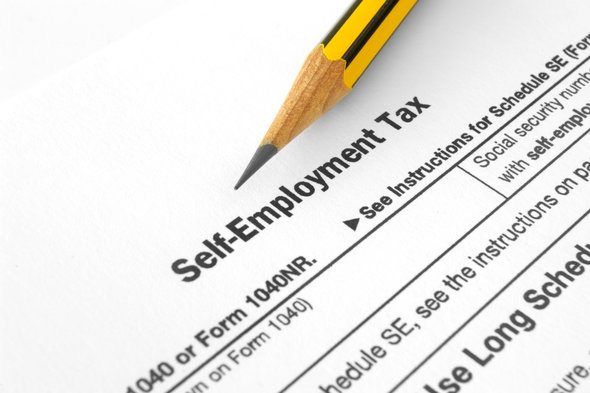

If you own an unincorporated business, you likely pay at least three different federal taxes. In addition to federal income taxes, you must pay Social Security and Medicare taxes, also called the self-employment tax.
Self-employment taxes are not insubstantial. Indeed, many business owners pay more in self-employment taxes than in income tax. The self-employment tax consists of
- a 12.4 percent Social Security tax up to an annual income ceiling ($147,000 for 2022) and
- a 2.9 percent Medicare tax on all self-employment income.
These amount to a 15.3 percent tax, up to the $147,000 Social Security tax ceiling. If your self-employment income is more than $200,000 if you’re single or $250,000 if you’re married filing jointly, you must pay a 0.9 percent additional Medicare tax on self-employment income over the applicable threshold for a total 3.8 percent Medicare tax.
You pay the self-employment tax if you earn income from a business you own as a sole proprietor or single-member LLC, or co-own as a general partner in a partnership, an LLC member, or a partner in any other business entity taxed as a partnership. (There is an exemption for limited partners.)
You don’t pay self-employment tax on personal investment income or hobby income. For example, you don’t pay self-employment tax on profits you earn from selling stock, your home, or an occasional item on eBay.
The tax code bases your self-employment
tax on 92.35 percent of your net business income.
That means your business deductions are doubly valuable since they reduce both income
and self-employment taxes. In contrast, personal itemized deductions and “above-the-line”
adjustments to income don’t decrease your self-employment tax.
Some types of income are not subject to self-employment tax at all, including
- most rental income,
- most dividend and interest income,
- gain or loss from sales and dispositions of business property, and
- S corporation distributions to shareholders.
You calculate your self-employment taxes on IRS Form SE and pay them with your income taxes, including your quarterly estimated taxes.
If you have questions about the self-employment tax, please don't hesitate to call out office at 716-875-2100

Of course, the IRS is not likely to cut you a check for this money (although in the right circumstances, that will happen), but you’ll realize the cash when you pay less in taxes.
Here are six powerful business tax deduction strategies that you can easily understand and implement before the end of 2021.
1. Prepay Expenses Using the IRS Safe Harbor
You just have to thank the IRS for its tax-deduction safe harbors.
IRS regulations contain a safe-harbor rule that allows cash-basis taxpayers to prepay and deduct qualifying expenses up to 12 months in advance without challenge, adjustment, or change by the IRS.
Under this safe harbor, your 2021 prepayments cannot go into 2023. This makes sense, because you can prepay only 12 months of qualifying expenses under the safe-harbor rule.
For a cash-basis taxpayer, qualifying expenses include lease payments on business vehicles, rent payments on offices and machinery, and business and malpractice insurance premiums.
Example. You pay $3,000 a month in rent and would like a $36,000 deduction this year. So on Friday, December 31, 2021, you mail a rent check for $36,000 to cover all of your 2022 rent. Your landlord does not receive the payment in the mail until Tuesday, January 4, 2022. Here are the results:
- You deduct $36,000 in 2021 (the year you paid the money).
- The landlord reports taxable income of $36,000 in 2022 (the year he received the money).
You get what you want—the deduction this year.
The landlord gets what he wants—next year’s entire rent in advance, eliminating any collection problems while keeping the rent taxable in the year he expects it to be taxable.
2. Stop Billing Customers, Clients, and Patients
Here is one rock-solid, easy strategy to reduce your taxable income for this year: stop billing your customers, clients, and patients until after December 31, 2021. (We assume here that you or your corporation is on a cash basis and operates on the calendar year.)
Customers, clients, patients, and insurance companies generally don’t pay until billed. Not billing customers and patients is a time-tested tax-planning strategy that business owners have used successfully for years.
Example. Jim, a dentist, usually bills his patients and the insurance companies at the end of each week. This year, however, he sends no bills in December. Instead, he gathers up those bills and mails them the first week of January. Presto! He just postponed paying taxes on his December 2021 income by moving that income to 2022.
3. Buy Office Equipment
With bonus depreciation now at 100 percent along with increased limits for Section 179 expensing, buy your equipment or machinery and place it in service before December 31, and get a deduction for 100 percent of the cost in 2021.
Qualifying bonus depreciation and Section 179 purchases include new and used personal property such as machinery, equipment, computers, desks, chairs, and other furniture (and certain qualifying vehicles).
4. Use Your Credit Cards
If you are a single-member LLC or sole proprietor filing Schedule C for your business, the day you charge a purchase to your business or personal credit card is the day you deduct the expense. Therefore, as a Schedule C taxpayer, you should consider using your credit card for last-minute purchases of office supplies and other business necessities.
If you operate your business as a corporation, and if the corporation has a credit card in the corporate name, the same rule applies: the date of charge is the date of deduction for the corporation.
But if you operate your business as a corporation and you are the personal owner of the credit card, the corporation must reimburse you if you want the corporation to realize the tax deduction, and that happens on the date of reimbursement. Thus, submit your expense report and have your corporation make its reimbursements to you before midnight on December 31.
5. Don’t Assume You Are Taking Too Many Deductions
If your business deductions exceed your business income, you have a tax loss for the year. With a few modifications to the loss, tax law calls this a “net operating loss,” or NOL.
If you are just starting your business, you could very possibly have an NOL. You could have a loss year even with an ongoing, successful business.
You used to be able to carry back your NOL two years and get immediate tax refunds from prior years, but the Tax Cuts and Jobs Act (TCJA) eliminated this provision. Now, you can only carry your NOL forward, and it can only offset up to 80 percent of your taxable income in any one future year.
What does this all mean? You should never stop documenting your deductions, and you should always claim all your rightful deductions. We have spoken with far too many business owners, especially new owners, who don’t claim all their deductions when those deductions would produce a tax loss.
6. Deal with Your Qualified Improvement Property (QIP)
In the CARES Act, Congress finally fixed the qualified improvement property (QIP) error that it made when enacting the TCJA.
QIP is any improvement made by you to the interior portion of a building you own that is non-residential real property (think office buildings, retail stores, and shopping centers) if you place the improvement in service after the date you place the building in service.
The big deal with QIP is that it’s not considered real property that you depreciate over 39 years. QIP is 15-year property, eligible for immediate deduction using either 100 percent bonus depreciation or Section 179 expensing. To get the QIP deduction in 2021, you need to place the QIP in service on or before December 31, 2021.
I trust that you found the six ideas above worthwhile. If you would like to discuss any of them, please give us a call.
Armenia CPA PLLC